Medical Laboratory Science students participate in simulation lab
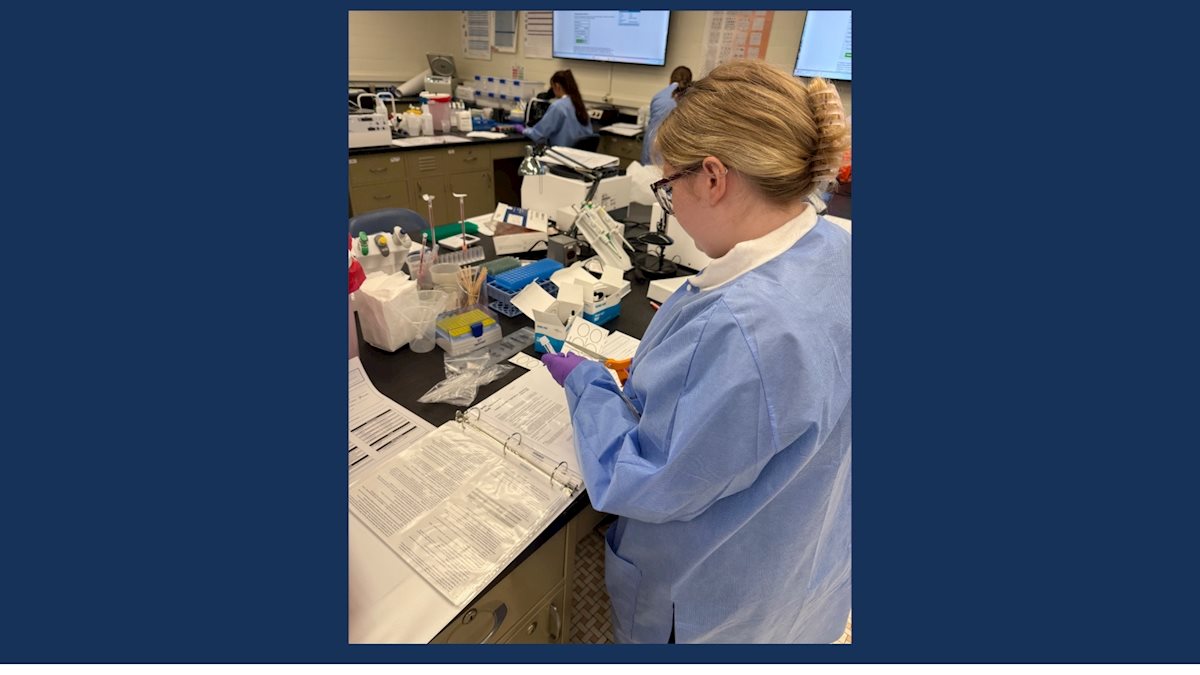
Students in the Medical Laboratory Science program at the WVU School of Medicine stepped into the role of laboratory professionals during a hands-on simulation lab designed to prepare them for clinical practice.
The simulation gave undergraduate and graduate students the opportunity to apply the knowledge and technical skills they have developed in the classroom while working through realistic scenarios that mirror the fast-paced environment of a clinical laboratory.
Led by faculty members Michelle Herdman, PhD, MLS (ASCP), Amara Sugalski, MA, MLS (ASCP), Jessica Rubenstein, MPH, MLS(ASCP) and Jason Evans, PhD, MLS (ASCP), the experience challenged students to think critically, communicate effectively and adapt to unexpected situations while maintaining quality patient care.
“Activities like our simulation lab are important because they build confidence in our students as laboratory professionals,” Rubenstein, an assistant professor, said. “The simulation is designed to give our students real-world experience in a low-stakes environment. This way, they can practice the skills that they've learned in class, and the faculty can provide feedback and make corrections before they begin their professional careers. Our goal is that by the time they reach their clinical rotations, our students feel more comfortable in the laboratory and more self-assured in their ability to do their job well.”
During the simulation, students were assigned to one of several laboratory benches, including hematology, chemistry, immunology/coagulation or urinalysis/body fluids. They completed a two-hour shift, processing and analyzing patient samples before reporting their results.
Throughout the exercise, faculty introduced unexpected challenges via challenge cards that required students to adjust their workflow while continuing to prioritize patient care.
Challenge cards presented scenarios such as drawing blood from an outpatient, responding to instrument failures or managing a sudden influx of samples. Students were responsible for rejecting unacceptable samples, communicating critical results to the "floor" and ensuring each member of their team took a scheduled break before handing off the laboratory to the next shift.
For Christina Richardson, a graduate student in the Medical Laboratory Science program, the simulation reinforced the importance of adaptability and teamwork.
“My biggest takeaway is learning adaptability, communication and overall lab workflow without being prompted,” Richardson said. “Although professors are present, the students run the entire session. Accurate results are always a priority, but staying upbeat and flexible also plays a part in timely, high-quality patient care. This experience helps bridge the gap between classroom and clinicals and allows students to solve problems under pressure.
“Experiences like this are important because they hone skills, build confidence, and encourage independent thinking while working collaboratively, which are valuable tools for preparing for clinicals and beyond.”
The simulation is the second of three laboratory experiences students will complete as part of the Medical Laboratory Science curriculum. A third simulation, scheduled for the end of the fall semester, will expand the experience by incorporating microbiology and blood bank benches.
To learn more about the undergraduate and graduate Medical Laboratory Science programs at WVU, visit medicine.wvu.edu/biomedical-laboratory-diagnostics/medical-laboratory-science-bs-ms/.